
Istanbul Is Now Europe's Busiest Airport. Here's What It Means for Your Connection
Istanbul overtook Heathrow in July — 8.15 million passengers to 7.86 million. The cause isn't a Turkish surge so much as a Gulf collapse: Heathrow's Middle East traffic fell 20.2 percent year on year, and Dubai still hasn't recovered from the airspace closures that knocked its March traffic down 66 percent.
What this means if you're flying
Istanbul is holding up. I transited a few days ago. Expect occasional pinch points at transfer security and immigration — build in 90 minutes for a connection (but watch the clock - Turkish Airlines has a very strict gate closing policy), more in the early-morning and late-evening banks. But the airport runs well below its design capacity and it shows. A fourth runway opens this month.
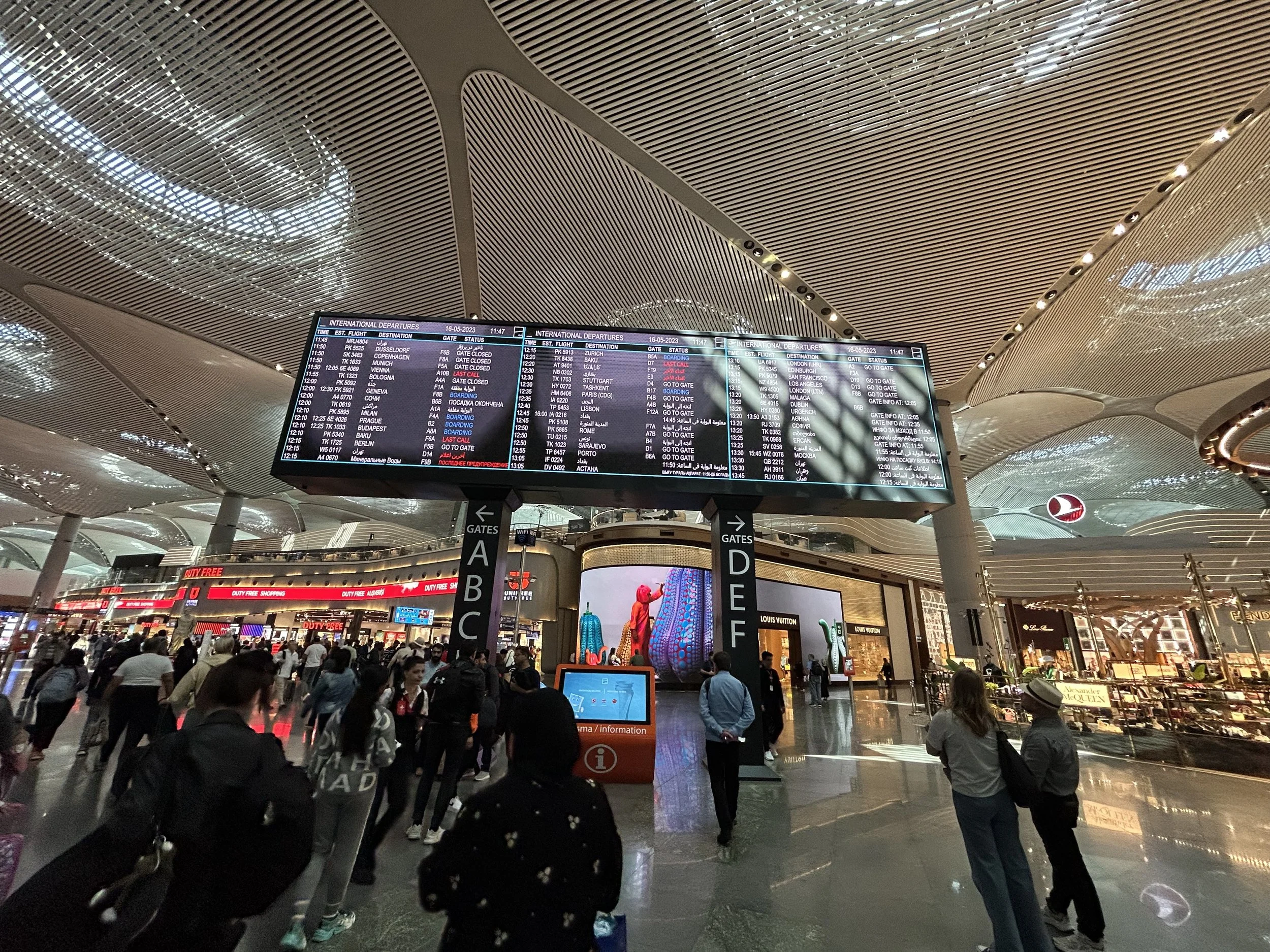
The departures hall at Istanbul Airport, May 2023. The terminal was built for 90 million passengers a year and is designed to expand well beyond that. Photo: M. Bociurkiw
Turkish Airlines is the safe operational bet right now. Multiple daily frequencies on major routes mean that if an aircraft goes tech, there's another one behind it. The product is solid rather than spectacular; the schedule discipline is the selling point, and on-time departures are up more than ten points year on year.
Gulf fares are cheap for a reason. Emirates, Qatar and Etihad are discounting hard. If your dates are flexible, there are real bargains via Dubai and Doha. If you have a wedding, a cruise departure or a non-refundable anything on the far end, pay the premium and route around the region.
Your flight is longer than it used to be. Europe–Asia routings now thread the Caucasus corridor over Georgia and Azerbaijan, adding roughly 60 to 90 minutes versus the old Gulf track. Budget for it on tight connections.
The Heathrow penalty is on the ground. Even when the flying works, getting out of the airport is where London costs you. The Heathrow Express is around £26 on the day — though roughly £10 if you book 30 or more days ahead — and the Elizabeth line is a flat £15.50 at any hour, with no off-peak discount. The Piccadilly line is £5.90 but takes 50 to 60 minutes. Book the Express early or take the Elizabeth line; the walk-up fare is the trap. This is a real part of why I've quietly rerouted a lot of my own flying away from London.
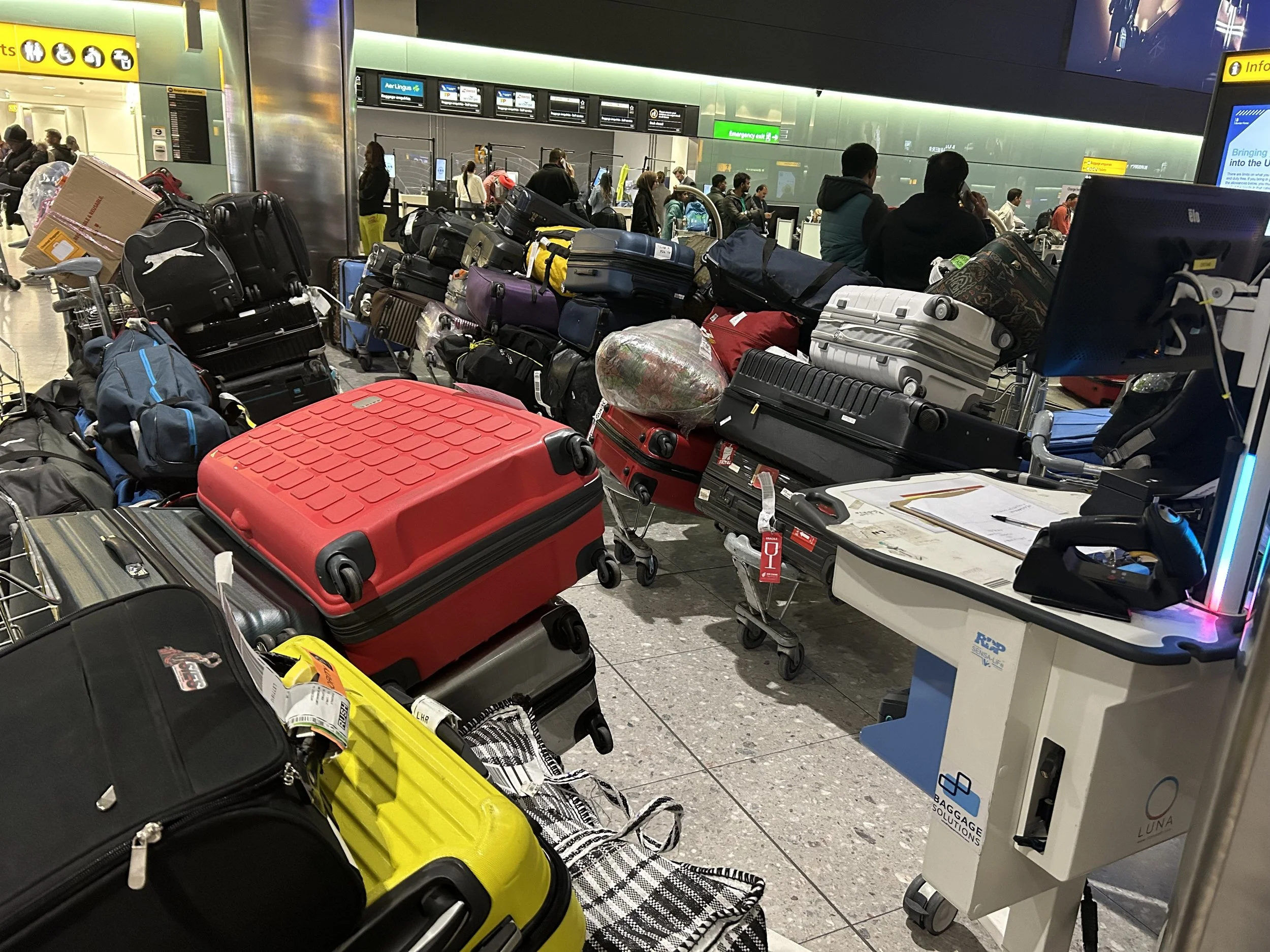
Baggage hall chaos at London’s Heathrow Airport. Photo: M. Bociurkiw
Insurance matters more than usual. Check your policy covers disruption from airspace closure — some exclude it as a political-risk event.
New routes worth knowing about
Yerevan is finally easy. Turkish began Istanbul–Yerevan on 11 March, the first scheduled link in decades, and ramped it to double daily by mid-June. If Armenia has been on your list — and it should be; the monasteries, the wine country around Areni, Yerevan's café culture — the awkward routing excuse is gone. You can now reach Zvartnots with one stop from most of Europe and North America. Worth knowing the context: the Turkey–Armenia land border has been closed since 1993 and remains closed. The planes fly over a shut frontier.
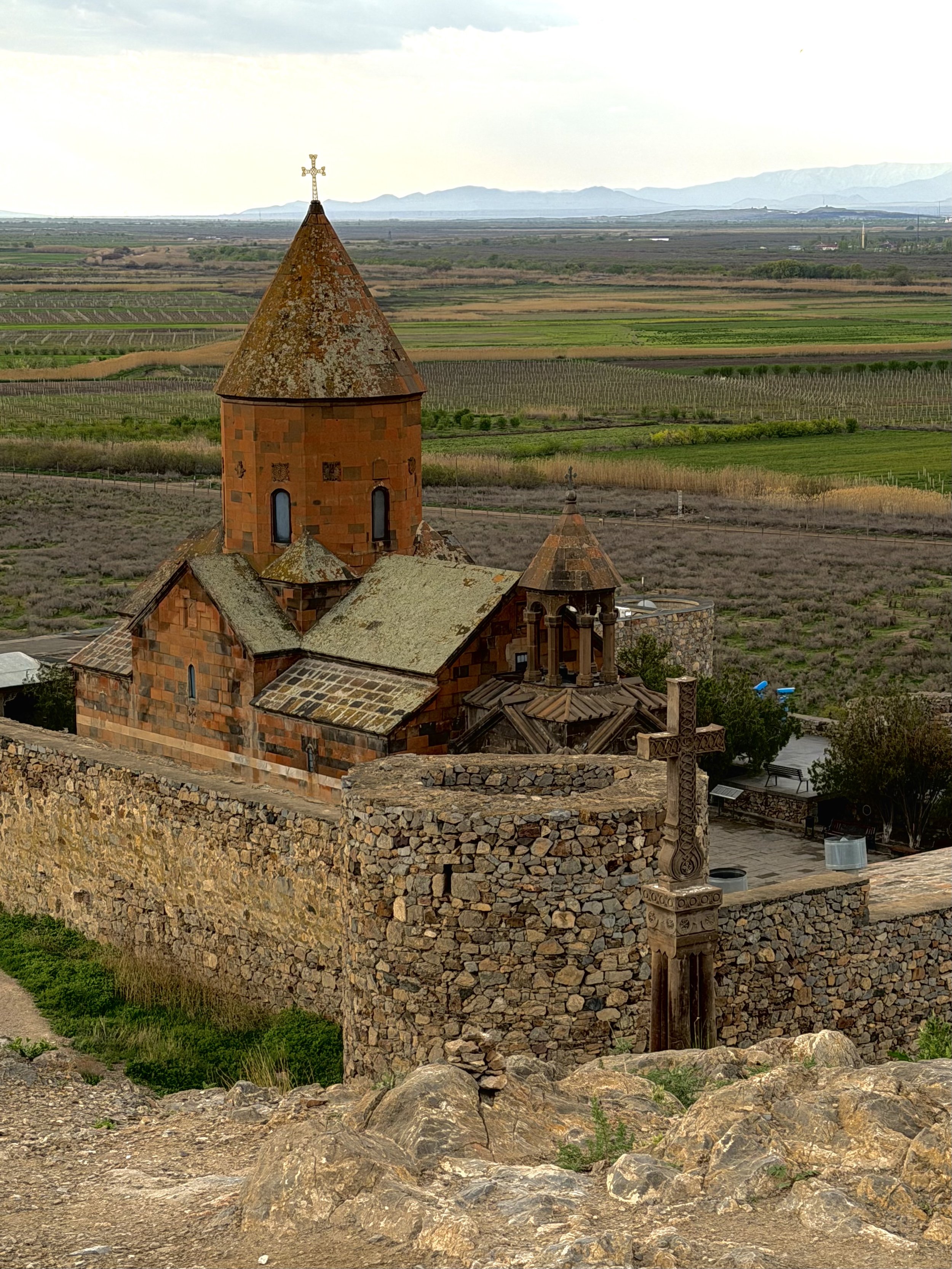
Khor Virap is a historic 17th-century Armenian monastery located in the Ararat Plain. It sits roughly 40 kilometers south of Yerevan near the Turkish border. Photo: M Bociurkiw
Chișinău is better connected than you'd think. Moldova lost its flag carrier when Air Moldova folded in 2023, but Turkish is now among the busiest operators there alongside FlyOne and HiSky. For anyone heading to Moldova's wine country — Cricova, Mileștii Mici — the access problem is largely solved.
And then there's Ukraine
This is the one to watch, and the race to get back in is already being run in public.
Before February 2022, Turkish Airlines served eight Ukrainian cities: Kyiv, Odesa, Lviv, Kharkiv, Zaporizhzhia, Kherson - and earlier, Mykolaiv and Ivano-Frankivsk. That is a wider Ukrainian footprint than most foreign carriers manage anywhere, and sources inside the airline say the intent is to return as soon as conditions allow.
But Ryanair has been louder and more specific for longer. Michael O'Leary has committed to putting up to 30 new Boeing 737 MAX aircraft into Kyiv, Lviv and Odesa — an investment the airline puts at over $3 billion — and to running around 600 flights a week to more than 20 EU capitals. His stated timeline has tightened over the years from eight weeks after airspace reopens to six, and he has said plainly that he wants Ryanair to be the first airline back.
Both things can be true, because they're fighting for different passengers. Ryanair wants the point-to-point traffic — the roughly 14 million Ukrainians dispersed across Europe, flying home to see family. Turkish wants the connecting traffic: Ukraine to Asia, the Gulf, the Americas, all routed over Istanbul. If you're flying Kyiv–Warsaw, Ryanair will almost certainly be cheaper. If you're flying Kyiv–Bangkok, or Vancouver-Kyiv, Istanbul is where you'll change.
Two things to keep expectations honest. Nothing moves until EASA lifts its airspace restriction, which requires a security situation nobody can currently forecast. And O'Leary himself has complained that Boryspil and Lviv never responded to the growth plan Ryanair submitted years ago — without airport agreements in place, he has conceded the restart would begin far smaller, on the order of one million passengers in the first year rather than the ten million he's targeting.
Expect Lviv and Kyiv before the rest. Odesa sustained damage and Kharkiv and Kherson will take longer.
Two footnotes
One for the aviation nerds: the main Turkish Technic hangar at Istanbul is being expanded and looks set to roughly double. Unglamorous, but it's why a technical fault in Istanbul is more likely to mean a two-hour delay than an overnight. The airline says the new capacity lets it work on about a fifth more aircraft at once.
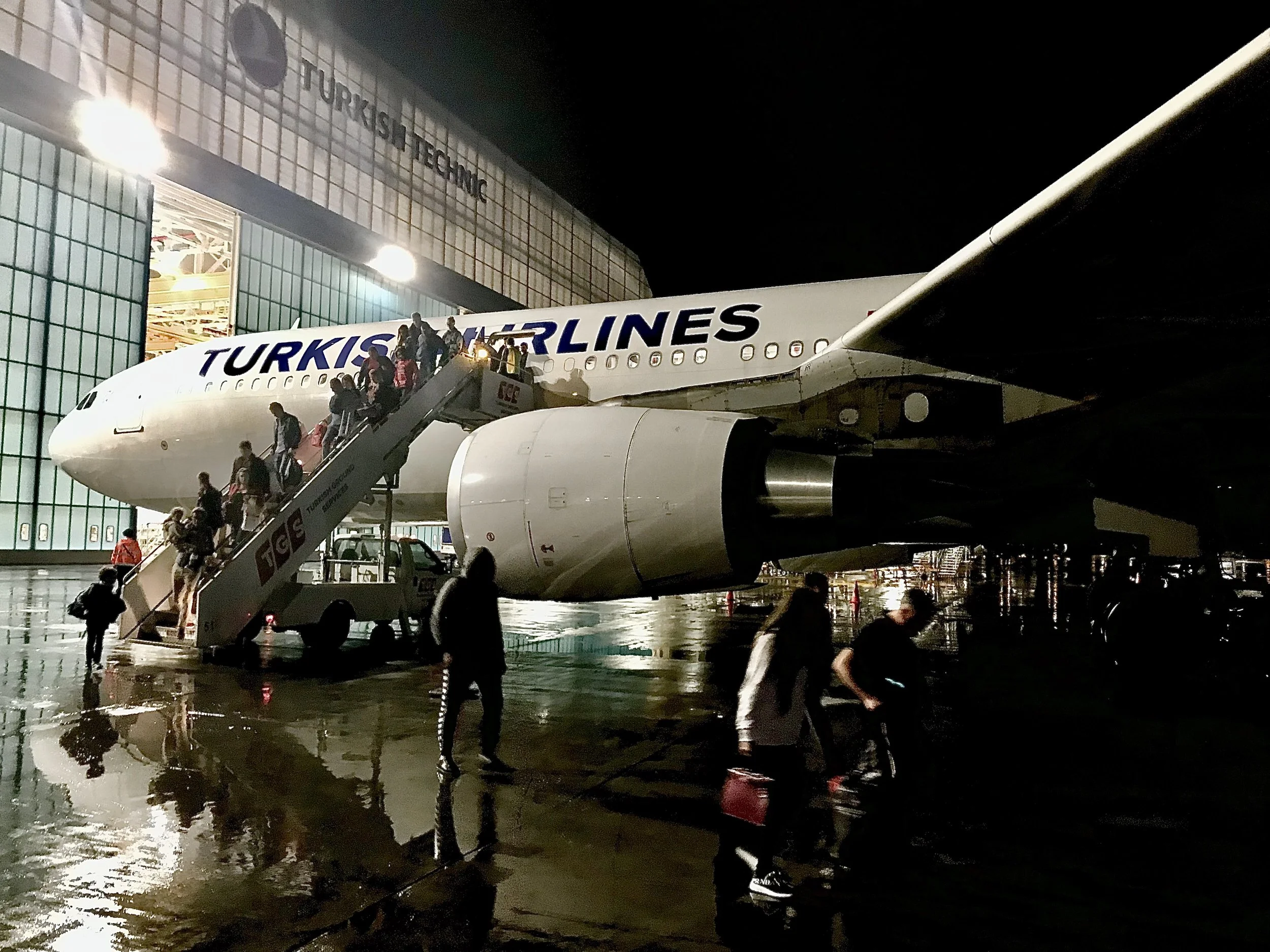
The Turkish Technic hangar at Istanbul Airport in May 2019, a month after Turkish Airlines completed its move to the new airport. The facility is now being expanded to lift heavy-maintenance capacity by around a fifth. Photo: M. Bociurkiw
On safety, briefly: Iranian missiles did enter Turkish airspace three times in March, all intercepted by NATO, all in the southeast near the Syrian border and the İncirlik airbase — nothing since. It's a footnote, not a reason to reroute.
Watch item: rapid growth is the enemy of service quality. Turkish is adding 85 aircraft this year. If lounges, catering and ground staffing start to slip, that's where it'll show first. So far, the two Istanbul lounges remain places I'd happily spend a very long layover.
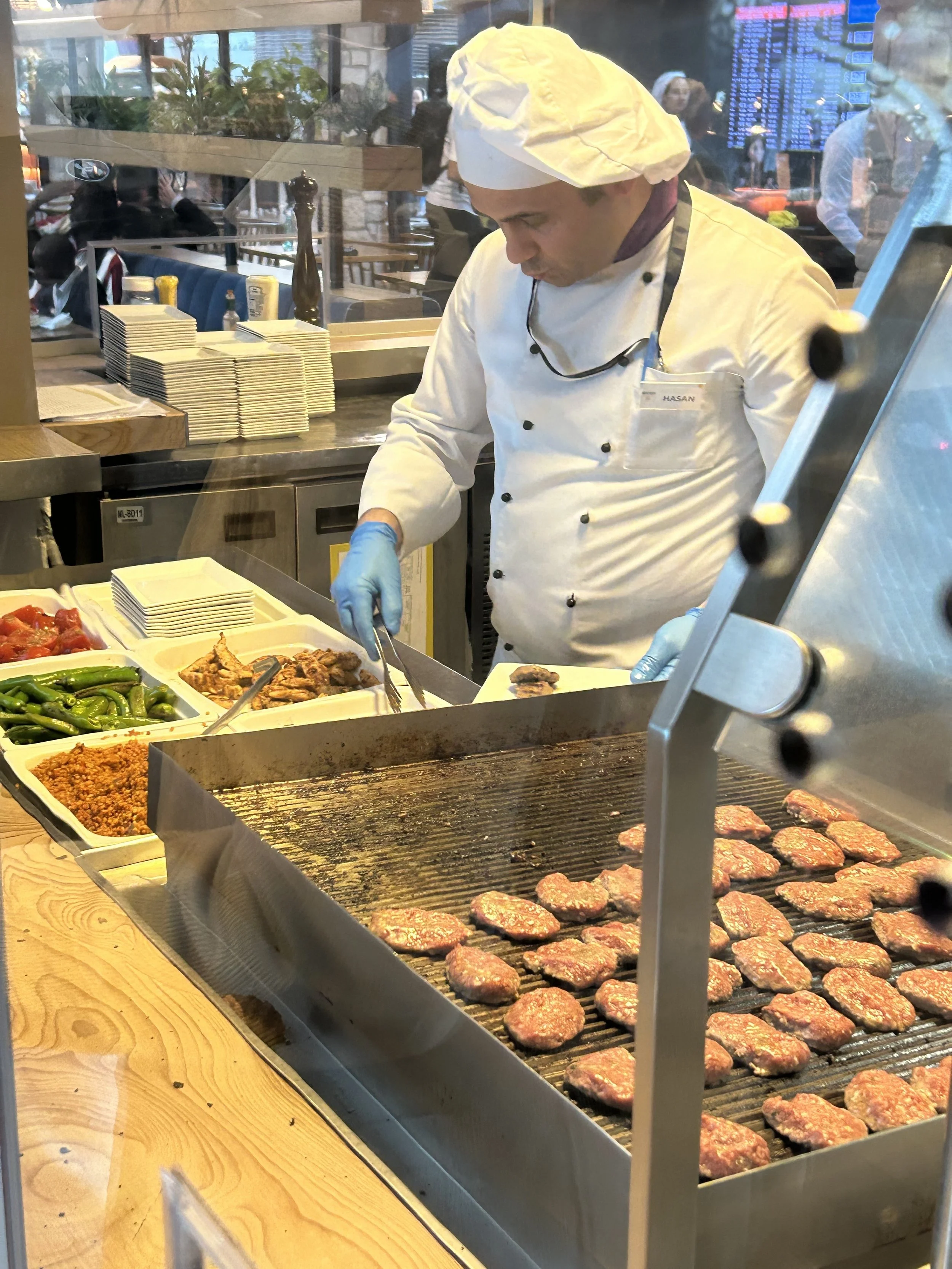
Köfte cooked to order in the Turkish Airlines lounge at Istanbul Airport, May 2023. Live cooking stations are what separate the lounge from the buffet. Photo: M. Bociurkiw