
Flying Is Getting Expensive Again. Here’s Who to Blame
Ryanair blames Brussels. Airlines blame fuel. My own fare receipts tell a messier story, and the biggest line item may surprise you.
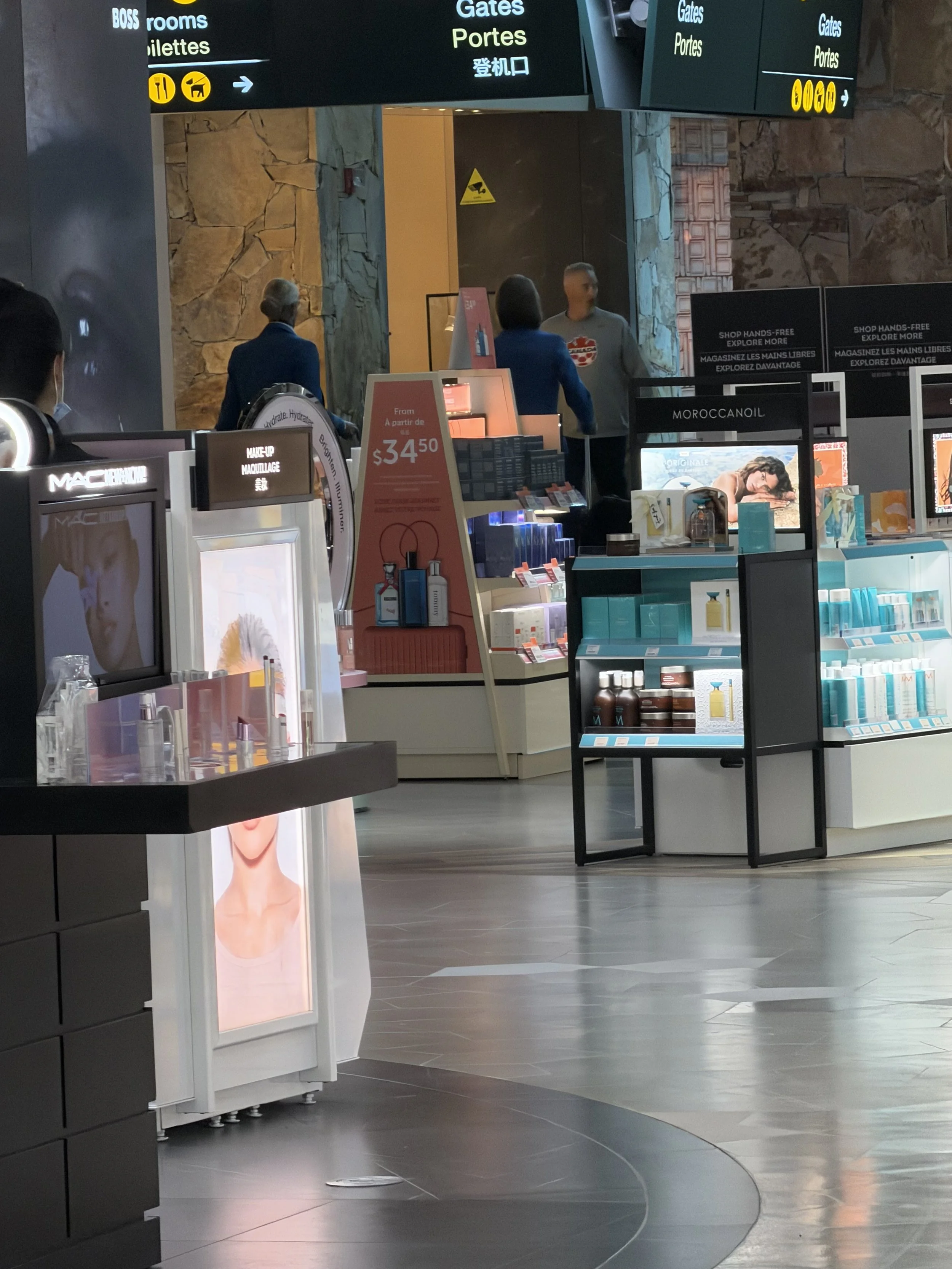
Airside, many terminals have become obstacle courses of shops. International departures at Vancouver International Airport, March 2026. Photo: M. Bociurkiw
Michael O’Leary, Ryanair’s combative chief and arguably the king of low-cost flying, has launched another broadside against Brussels. This time, he may have a point.
In a Euronews interview on October 20, O’Leary called European Commission President Ursula von der Leyen “useless”. He wants the EU to stop loading costs onto short-haul European flights while US, Asian and Chinese carriers on long-haul routes into Europe largely escape the same levies, even though those flights produce more than half of European aviation’s emissions.
He’s backing words with action. Ryanair is cutting a million seats and 20 routes from Belgium this winter over a tax rise to €7 per ticket. That’s still well below the Netherlands (€30.25) or Germany (€13.03). He also warns fares will rise sharply in 2027, when Ryanair’s fuel hedge at around US$67 a barrel expires. Brent crude has just topped US$110.
But this is about more than one airline boss picking a fight.
What’s really in your fare
On October 20, I priced two one-way economy tickets to Ottawa on Air Canada for early November. The cheapest fare from Chișinău came to C$1,576.80. That was a bare-bones Basic ticket with no refund, no free checked bag and a 19½-hour layover in Montreal. The cheapest non-stop from London cost C$2,866.70. That’s one way, and off season.
Now look at the breakdown. On the Chișinău ticket, Moldovan, Austrian and Canadian taxes and fees totalled just C$50.10. Air Canada’s “carrier surcharge” was C$325.70, more than six times as much. From London, the UK’s steep Air Passenger Duty and service charge came to C$288.10, and Air Canada still topped that with a C$384.60 surcharge.
What’s in the surcharge? According to Air Canada’s own website, it’s a mix of fuel, navigation charges and environmental compliance costs, plus “fare premiums” for peak travel periods. In other words, part of it is simply more fare by another name. Passengers are never told how much of the surcharge is which.
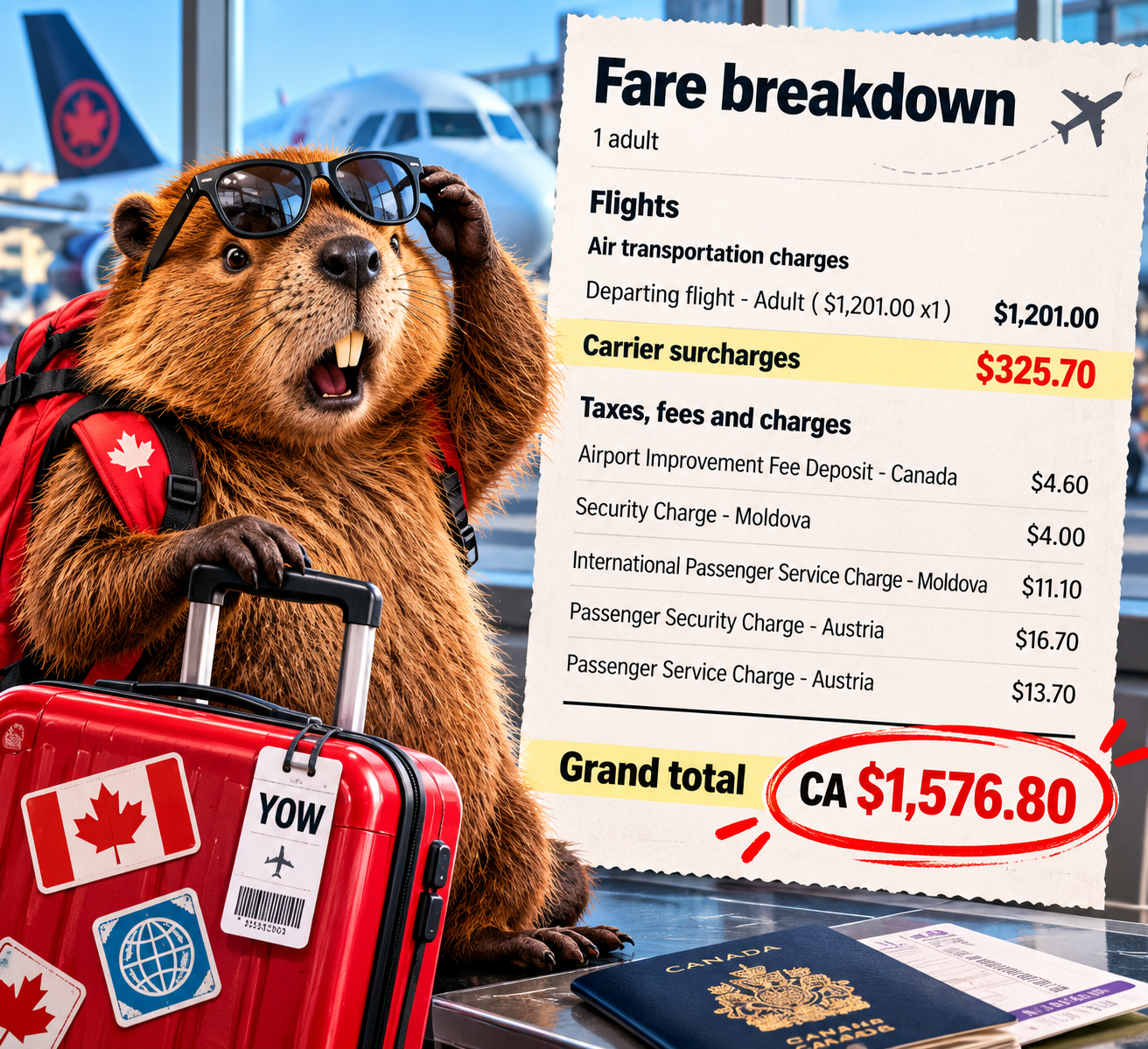
AI-generated illustration based on Air Canada’s cheapest one-way fare from Chișinău to Ottawa, priced October 20. The “carrier surcharge” is more than six times all government taxes and airport fees combined.
O’Leary says Ryanair guarantees no fuel surcharges. Legacy carriers say theirs cover volatile costs such as fuel. Fair enough. But when fuel prices fall, do the surcharges follow, or do they become another permanent revenue stream? With the Middle East war driving up jet fuel, expect another nasty surprise.
Governments and airports take their cut too
Governments aren’t blameless either. On a recent trip from Ottawa via London and Istanbul to Chișinău, I paid a C$45.20 Canadian Airport Improvement Fee, C$34.42 for security and C$42.10 for a UK passenger service charge. That was before the Turkish and Moldovan charges. Even points don’t spare you. A Rome–Brussels Aeroplan redemption in late 2023 cost me 7,500 points plus C$84.40 in cash, including five separate Italian taxes and charges.
Someone has to pay for security, air traffic control and infrastructure. But who scrutinises this ever-growing pile of fees?
Then there are the airports, many now shopping malls with runways attached. At Gatwick, you navigate a luxury retail maze to reach your gate, and it costs £10 just to drop someone off, up from £7. Heathrow brought in its own £5 drop-off charge in late 2021. According to an RAC analysis, drop-off charges at major UK airports have risen by a third on average since summer 2025. The UK government has now ordered a review. Revenue is rising faster than service.
O’Leary is no innocent bystander. Ryanair pioneered à-la-carte flying, charging for everything from bags to seats. But low-cost carriers also put flying within reach of millions. Meanwhile, Brussels talks endlessly about competitiveness and moves at a crawl.
For decades, low-cost carriers democratised flying. Now, between government taxes, airport charges, airline surcharges and soaring fuel, air travel risks becoming a privilege of the well-off again.
Everyone takes a slice. Nobody takes responsibility for the final bill.
Your turn. Have you been hit by a carrier surcharge bigger than the taxes on your ticket? Send me your fare breakdowns, with your name and booking reference blacked out. The airlines are giants, but receipts are hard to argue with.
A version of this story first appeared in World Briefing.